


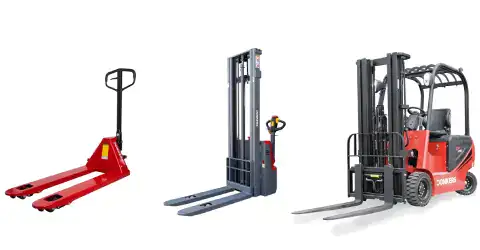
The movement of goods is a fundamental part of the daily routine of many companies. Whether in a warehouse, workshop, industrial unit, commercial space, or distribution center, transporting, lifting, and organizing loads efficiently is essential to ensure productivity and the smooth operation of any activity.
To facilitate these tasks, there is equipment specifically designed to move heavy loads, optimize available space, and reduce the physical effort of operators. Among the most commonly used solutions are pallet trucks, stackers, and forklifts. Knowing how to distinguish them is important to choose the most suitable machine for each workspace and avoid unnecessary investments.
But what exactly is the difference between a pallet truck, a stacker, and a forklift?
What are the advantages of each and in what situations should they be used?In this article, we explain everything you need to know to make the right choice!
Pallet Truck: The King of Horizontal Handling
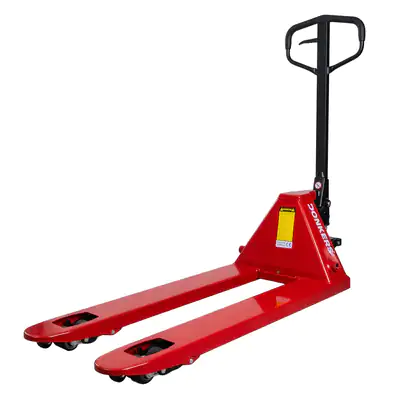
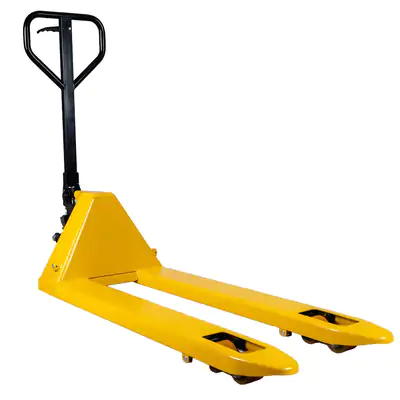
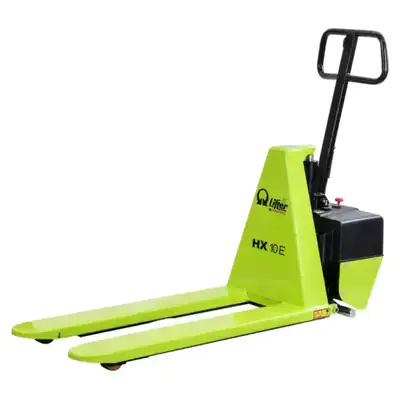
The pallet truck (manual or electric) is the true workhorse of any warehouse. It is the most basic, yet indispensable, equipment for transporting goods at ground level. How it works: It consists of two parallel forks that are inserted into the openings of the pallets, allowing them to be lifted slightly off the ground for horizontal transport. Where it excels: It is the undisputed leader in cost, simplicity, and agility for short distances on the horizontal plane. If your goal is to unload pallets from a truck to the receiving area or transport them from one end of the warehouse to the other without major complications, the pallet truck is unbeatable. Limitation: Not designed for heights. If you need to store merchandise on elevated shelves, pallet racking is out of the question. What Types of Pallet Racking Exist? Manual Pallet Racking This is the traditional solution for moving loads. It works through a manually operated hydraulic system, which allows the forks to be raised using a lever and the load to be moved by the operator's force.
It is an excellent option for small and medium-sized operations, short distances, and spaces where pallet handling is not too frequent.
Electric pallet truck
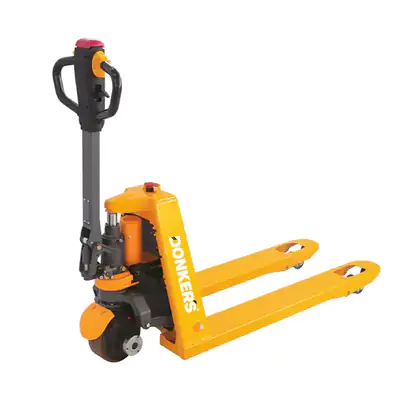
Unlike the manual model, the electric pallet truck uses a battery-powered motor to facilitate the movement of loads. It can also ensure the electric lifting of the forks, depending on the model.
It is especially suitable for companies that move goods regularly and travel longer distances!
Stackers
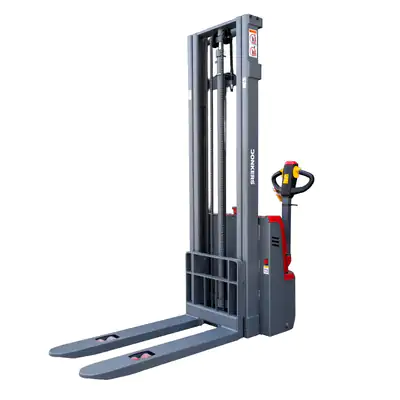
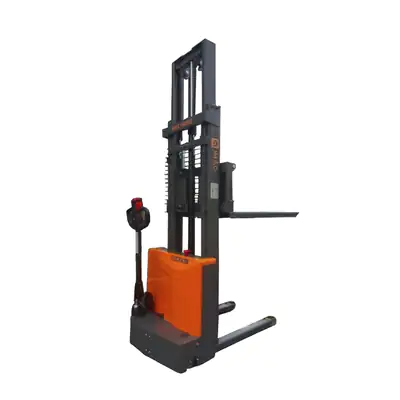
If your warehouse has grown in height but you don't have room to maneuver gigantic machines, the stacker comes into action.
-
How It works: Similar to a pallet truck at the base, the stacker has a vertical lifting tower (mast) up which the forks rise, allowing the load to be lifted to several meters high (often between 3 and 3.5 meters, like the models available in our range).
-
Where it excels: It is the absolute leader in cost-effectiveness for small and medium-sized warehouses that need to store pallets at height (shelves/racks), but which do not justify the investment in a traditional forklift. They are more compact, easier to maneuver in narrow corridors, and much more economical.
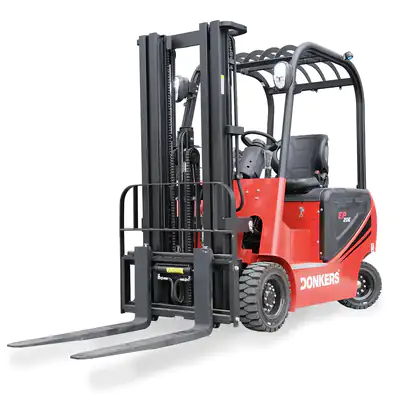
ForkliftsUnlike pallet trucks and many stackers, conventional forklifts have a more robust. In addition, our forklifts operate quietly and produce no exhaust emissions during use.
Ultimately, the forklift is the heavy machine in this family. The operator sits down, drives like in a small vehicle, and lifts larger loads, faster, and for much longer.
-
How it works: A robust machine, with a seat for the operator, designed to support large loads (often above 1.5 to 2 tons) and reach great heights with total stability.
- Where it leads: It is the undisputed leader in terms of power, load capacity, speed, and versatility in different environments. If your operation requires working outdoors (uneven floors, ramps) and indoors, moving tons of material continuously and reaching elevated floors, the forklift is irreplaceable. Limitation: Requires wider aisles for maneuvering and the initial and maintenance investment is considerably higher. src="/images/263019/12c24/Novo-Projeto-2026-06-03T100128.896.webp" width="400" height="400" alt="" />
How to choose: Five useful questions- What is the maximum weight of your pallets? Always choose equipment with a margin above the actual weight.
- How high do you need to store them? If the answer is "to the floor," a pallet rack is enough. If it's shelving, consider a stacker or forklift.
- How often will you use it? For occasional use, the manual is sufficient. For daily use, the electric option saves a lot of effort.
- What is the width of your aisles? Stackers and pallet trucks excel in tight spaces.
- Is the floor even? Polyurethane and rubber wheels behave differently. It's worth asking us.
At Bernardinos, we speak your language
When choosing material handling equipment, there is no universal solution. The most important thing is to find a machine that meets the real needs of your business, taking into account the type of work, the loads to be moved and the conditions of the available space.
For 80 years we have been helping customers choose the right machine. If you still have doubts between a pallet truck, a stacker or a forklift, talk to us.
Visit one of our stores in Alcantarilha (Algarve), Cabanões (Viseu) or Santarém, call 232 424 626 or explore the complete range now.
Bernardinos - That Machine!
-
Comments
Leave your comment!